
"countries and regions"
10000 article(s) found
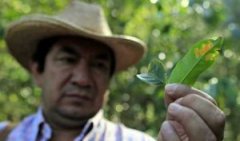
Coffee leaf rust strikes-Central American coffee producers suffer heavy losses
Coffee leaf rust, which begins to spread among coffee trees as small yellow spots, will soon turn coffee leaves into a pile of dead leaves.

A brief introduction to the planting Market Price of Santo Domingo Fine Coffee Bean varieties
Coffee in Dominica is graded in sizes such as AA and AB, but it is classified as top grade by coffee from highlands such as Sivao and Baraona. Both kinds of coffee are harvested from February to May and are refined by washing. Turning to the introduction of Dominican coffee, the most distinctive features are fresh and elegant, full of particles, excellent acidity and pleasant flavor.

A brief introduction to Renas Manor in the Santa Ana Volcano region of El Salvador in the north of Central America
The Republic of El Salvador, located in the north of Central America, is the most populous country in Central America. The country is bordered by Honduras to the north, the Pacific Ocean to the south and Guatemala to the northwest. The national economy is dominated by agriculture, and the main crops are coffee and cotton. El Salvador is also one of the birthplaces of ancient Mayan culture, with not only distant culture, but also volcanoes, plateau lakes and Pacific coast.

Flavor description of Ethiopian Sidamo Coffee Variety introduction to Regional treatment of Manor production
Ethiopian Sidamo Coffee Flavor describes the taste of Ethiopian coffee grown in close to the natural environment, after years of planting under the same growth conditions, Ethiopian coffee beans have gradually adapted to the environment here. More than 60% of coffee beans are grown in forests or semi-forests. Coffee growers on a large scale

Tarasu, a coffee-producing region in southern El Salvador
Located in the south of the country's capital, San Jos, Tarasu is one of the most valued coffee growers in the country. La Minita Tarrazu coffee is a famous local product, but its production is limited, about 72600 kilograms a year. It is grown on a piece of land called La Minita, which is owned by the McAlpine family of England.

Salvadoran Coffee Flavors Sonsonate Province IzaIco Region
In Cuscacbapa, El Salvador, the beans are packed and ready for export. El Salvador's coffee is a Central American specialty, light, aromatic, pure and slightly acidic. Like Guatemala and Costa Rica, coffee in El Salvador is graded according to altitude, with the higher the altitude, the more coffee. Good. The best brand is Pip.

What growth conditions are needed to grow coffee beans?
The latitude is between the north and south latitudes, that is, the temperature in the tropical and tropical areas is about 21 degrees Celsius, and the sunshine is only a few hours a day. The terrain is mainly located in the mid-levels of 300 to 400 meters, or on slopes of 1500 to 2500 meters. The higher the altitude, the higher the quality. Because the sunshine time is short and the drainage is good. Under the coffee bar like the root tide, high in the middle of the coffee bar, placed in the coffee bar.

What are the characteristics of Colombian coffee what are the main producing areas of Colombian coffee
For more information on coffee beans, please follow the Coffee Workshop (official Wechat account cafe_style). Colombia's main producing areas are in the central and eastern mountains. The most important plantations along the central mountains are located in Medellin, Armenia and Manizales, in the above three areas.

Flavor description of Honduran Coffee Bean introduction to the characteristics of taste manor by regional treatment method
Honduras Coffee Bean Flavor description Variety Regional treatment method Taste Manor characteristics Honduras declared its independence on September 15, 1821, but was incorporated into the first Empire of Mexico in 1822. He joined the Central American Union in 1823 and withdrew from the Central American Union in October 1838 to establish a republic. In 1840 Honduras, supported by Guatemalan dictator Rafael Carrera, was a conservative, Fran.

Fresh and elegant Santo Domingo boutique coffee bean cultivation geographical location, climate, good altitude
Carefully selected in this way, the high-quality Dominican coffee exudes a faint aroma and gives people a faint fruity aroma with a lingering finish and a smooth and smooth finish. To trace the origin of Tibica, we should first talk about the coffee trees originally planted in Martinique. These trees were planted by Dominicans as far back as the early 18th century, so Dominica began at that time.

Description of Coffee Flavor in Sidamo Coffee introduction to the method of regional treatment for the characteristics of varieties
Sidamo Coffee Flavor describes the characteristics of coffee varieties produced by the regional treatment method, as of 2012, Ethiopia has a total population of 91 million, making it the second most populous country in Africa. The population growth rate is 2.9%. [8] there are more than 80 ethnic groups in the country, including Oromo (40%), Amhara (20%), Tiger (8%), Somalia (6%) and Sidamo (4%).

A brief introduction to the treatment method of grinding degree and baking degree of aromatic Sidamo Shakiso boutique coffee beans
Shakisso/Shakiso, located in the Guji producing area of Sidamo, is one of the micro-producing areas with regional characteristics in the Sidamo producing area. The coffee in this region is quite unique, and the coffee produced has often attracted the attention of the market. The original meaning of Ninety Plus's legendary bean (nekisse) comes from Nectar from shakisso, its producing area.
Top Ten Coffee quality Coffee rankings
The Top Ten Top Ten Fine Coffee Coffee Association (SCAA) Baker Association 2012 raw bean contest (COTY-Coffees of the Year) ended a few days ago. 250 kinds of raw coffee beans from 26 countries in the world's major coffee producing regions took part in the competition for the 2011 / 12 Global Best Fine Coffee Award. After the professional judges on the dry aroma, wet fragrance, taste and style of the participating coffee

A brief introduction to the coffee producing areas of Colombia? What are the main varieties in Colombia?
For more information on coffee beans, please follow Coffee Workshop (Wechat official account cafe_style) Colombia, a country named after Columbus, the great navigator, and a football power that once had the Golden Lion King (our Chinese football sucks! ); a country that also produces literature (Garcia, author of one hundred years of Solitude, Nobel Prize for Literature. Horse

An introduction to the taste of coffee flavor description in Ethiopia's Xida Moshaschiso region.
President Mulatut Shawmei. He studied Chinese at Beijing language and Culture University (now Beijing language and Culture University) from 1976 to 1977; studied at the Department of philosophy of Peking University from 1977 to 1982; studied for a master's degree in the Department of National Politics of Peking University from 1984 to 1988; and studied for a doctorate in the Department of National Politics of Peking University from 1990 to 1991. He has served as a member of Ethiopia in Japan, Australia, China and other countries.

Which countries and regions can grow coffee? Why? Where does coffee come from? Coffee
Since coffee trees are tropical plants, they need to be planted in warm places. The main planting area is distributed between latitude 25 south and latitude 25 north with the equator as the center, so this area is also called the coffee belt. However, even in the coffee belt, Arabica and Robeska do not grow in exactly the same area, but grow up in an environment that is more suitable for their own growth.

Uganda Bukisu Coffee Bean Flavor Taste Description Variety Regional Characteristics Introduction
Uganda is a landlocked country in eastern Africa, straddling the equator, bordering Kenya in the east, Tanzania and Rwanda in the south, Congo (DRC) in the west and Sudan in the north. Most of the territory is located in the Central African Plateau, with many lakes, with an average altitude of 1000-1200 meters. There are many intermountain lakes and plateaus, which are known as plateau water towns. the Great Rift Valley

A brief introduction to the market price of fresh and elegant Santo Domingo boutique coffee beans
To trace the origin of Tibica, we should first talk about the coffee trees originally planted in Martinique. These trees were planted by Dominicans as far back as the early 18th century, so Dominica began growing coffee as early as that time. For a time, the Caribbean was almost synonymous with coffee production, but in recent years Cuba, Haiti and other producing areas have been severely damaged by Hurricane George.

El Salvador Coffee Bean Flavor Description Taste Manor Region Processing Method Grinding Scale Variety Introduction
El Salvador Coffee Bean Flavor Description Manor Production Area Processing Method Grinding Scale Variety Introduction Guerrilla warfare greatly disrupted the country's national economy, reducing coffee production from 3.5 million bags in the early 1970s to 2.5 million bags in 1990- 1991. The eastern part of the country was most affected by guerrilla warfare, and many farmers and workers were forced to leave their estates. A shortage of funds caused coffee production to plummet,

Mild Salvadoran coffee beans introduce the Kuskabapa region
Coffee from El Salvador is a specialty of Central America, where it is light, fragrant, pure and slightly sour. Like Guatemala and Costa Rica, coffee in El Salvador is graded according to altitude, and the higher the altitude, the better the coffee. The best brand is Pipil, which is what the Azbec-Aztec Mayan called coffee, which has been acquired.